Recent Videos: Ibeo, TI, Trioptics, Omnivision, ST, Gigajot

Image Sensors World        Go to the original article...

Ibeo publishes a video on LiDAR performance in fog and ways to improve it:

TI video shows an importance of clean power supply for image sensors:

Trioptics publishes its active alignment system video:


EETimes publishes an interview with Omnivision SVP Michael Wu about the company rebranding and latest products & partnership announcements:

ST publishes a video on choosing cover glass for its dToF proximity sensors (a longer version of this video is here):

Gigajot publishes its CTO Jiaju Ma presentation at Photonics Spectra conference:

Go to the original article...

Yole on 2021 Market Status

Image Sensors World        Go to the original article...

 Yole Developpement's Q4 2021 Quarterly CIS Market Monitor updates on the market status:

Go to the original article...

ON Semi Reports 45.2% Margins on CIS Products

Image Sensors World        Go to the original article...

SeekingAlpha publishes a transcript of Onsemi Q4 2021 earnings report. Few quotes:

"On the intelligent sensing front, our automotive imaging revenue grew by more than 20% quarter-over-quarter and approximately 40% year-over-year as we continue to see momentum in advanced safety with new design wins.

With consumers’ desire for additional safety features and an improved driving experience, we are seeing increased penetration of sensing in cars, including image sensors and ultrasonic sensing. At the same time, content per car is growing with each camera attached to one of our PMICs. We are also seeing accelerating demand for our imaging products for industrial and factory automation, in which revenue grew by approximately 10% quarter-over-quarter and 43% year-over-year. Industrial customers are investing in automation at an increased pace to improve efficiency and to reduce volatility in operations due to wage inflation and labor shortages, onshoring and social distancing mandates.

We have leveraged our experience in the automotive market to offer our industrial customers rugged, high resolution and high image quality sensors for the most demanding industrial applications. All of these execution vectors delivered a robust margin performance exceeding our target gross margin of 45% significantly ahead of schedule. This accelerated gross margin expansion was driven by a strong and accelerated execution in closing price-to-value discrepancy, cost reduction initiatives, a focused drive on ramping new products, a deliberate intent to shift more capacity to products for our strategic markets and operational efficiencies across our manufacturing footprint.

Revenue for Intelligent Sensing Group, or ISG, for the fourth quarter was $245.4 million, an increase of 18% year-over-year. GAAP gross margins for the fourth quarter was 45.1% and non-GAAP gross margin was 45.2%, a 370 basis point improvement quarter-over-quarter. The key contributors to our margin expansion have been favorable mix shift to higher margin and strategic products, elimination of price-to-value discrepancies in our portfolio and improved efficiencies in our manufacturing operations."

Go to the original article...

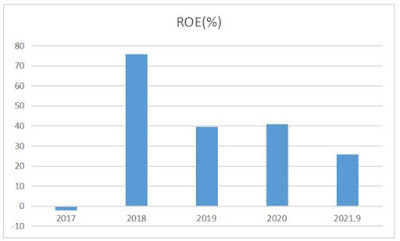
Galaxycore Stock Down by 17% in a Half Year after IPO

Image Sensors World        Go to the original article...

0033.com: On August 18, 2021, Lalaxycore was officially listed on the Science and Technology Innovation Board of the Shanghai Stock Exchange. Before the market, the total market value of Galaxycore once exceeded 100 billion yuan. On the first day of trading, Galaxycore  shares surged by 145.13%, and a total market value of 88.086 billion yuan.

As of January 28, 2022, Galaxycore's market value was 64.096 billion yuan, down by 17% within half a year of listing.

Zhao Lixin, the founder, chairman and CEO of Galaxycore worth is 28.2 billion yuan ($4.4 billion), down from $5.7 billion in August.

From January to June 2021, Galaxycore achieved operating income of 3.69 billion yuan, an increase of 50.99% over the same period last year. The net profit was 640 million yuan, an increase of 92.14% over the same period last year. The main reasons for the increase in the company's operating performance from January to June 2021 were that the company's business continued to grow, unit prices rose, and gross profit margins also improved.

Although the growth rate is high, the share of Galaxycore is still small. In 2020, the global share of Gekewei's CIS sales revenue accounted for 4%, ranking fifth.

Go to the original article...

NHK Develops 33MP 240fps-Fast Sensor for 4x Slow Motion 8K Broadcast Camera

Image Sensors World        Go to the original article...

NHK reports that it was able to develop a 240fps 33MP broadcast camera for 4x slow motion video:

Go to the original article...

New MIPI CSI-2 v4.0 Supports Always-On Mode, Compression for Tetra- and Nano-Cell CFAs, and RAW28 Color Depth

Image Sensors World        Go to the original article...

BusinessWireThe MIPI Alliance announces a major update to its MIPI Camera Serial Interface 2 (MIPI CSI-2) interface. CSI-2 v4.0 adds an always-on imaging that operates over as few as two wires to lower cost and complexity for ultra-low-power machine vision applications. CSI-2 v4.0 also adds multi-pixel compression for the latest generation of advanced image sensors and RAW28 color depth.
  • Always-On Sentinel Conduit (AOSC) — Enables always-on machine vision systems in which combinations of ultra-low-power image sensors and video signal processors (VSPs) can continuously monitor their surrounding environments and then wake their higher-power, host CPUs only when significant events happen. (Typically, the VSP will be either a separate device or integrated with the host CPU within a larger SoC.) Example uses include laptop/tablet-based face monitoring, video surveillance, and vision-based vehicle safety applications. AOSC enables image frames to be economically streamed from an image sensor to a VSP over a low-power MIPI I3C bus in a highly efficient manner, with scaling options to add extra I3C lanes and bandwidth as defined by the I3C specification.
  • Multi-Pixel Compression (MPC) — Provides optimized pixel compression for the latest generation of Tetra-Cell and Nona-Cell image sensors with multi-pixel color filter arrays (CFAs). The MPC feature helps alleviate the high bandwidth demands of these sensors by compressing both multi-pixel and standard Bayer CFA images more efficiently and with potentially higher quality than current methods. Reference code has also been made available to help integrators evaluate the algorithm and verify their implementations.
  • RAW28 pixel encoding — Supports the next generation of high-dynamic-range automotive image sensors for applications such as those required for ADAS and other safety-critical applications.

Go to the original article...

NHK Proposes 50/60Hz Flicker-Free 8K Video

Image Sensors World        Go to the original article...

2018 NHK paper "Flicker-Free Method for Video Captured at 120-Hz Frame Frequency by Interlaced Scanning and Electrical Shutter" by Toshiki ARAI and Hiroshi OHTAKE proposes interlaced approach to eliminate 50/60Hz flicker in 8K video:

"We propose a flicker-free method for video captured at a 120-Hz frame frequency and a 100-Hz illumination intensity variation frequency by using interlaced scanning and an electrical shutter to broadcast video during the 2020 Olympic Games in Tokyo. We found from the results of image simulation that the human eye cannot identify the decrease in vertical resolution of images with interlaced scanning when they are displayed at a 120-Hz frame frequency. We found that flicker in video captured with the flicker-free method was suppressed to less than one-twentieth of the flicker with 120-Hz progressive scanning as a result of implementation. The sensitivity of the prototype camera head with the flicker-free method also became 1.2 times higher than that with 120-Hz progressive scanning. The 120-Hz flicker-free method could be adopted in a fieldprogrammable gate array of the prototype camera head that has already been developed with a 120-Hz frame frequency."

Go to the original article...

Thesis on Current-Assisted SPAD Sensors

Image Sensors World        Go to the original article...

Vrije Universiteit Brussel publishes a PhD thesis "Current-assisted SPAD sensors fabricated in conventional CMOS process" by Gobinath Jegannathan.

"In this work, a novel SPAD sensor is presented where the novelty arises from the integration of a large absorption volume and a very small avalanche multiplication volume. Such a detector topology allows to have a thick absorption layer which leads to higher quantum efficiencies for NIR wavelengths. This integration is enabled by “current-assistance” principle where a drift field is created in the substrate by applying a potential gradient. This “current-assisted SPAD” is fabricated in a cost-effective CMOS process which is commercially available."

Go to the original article...

trinamiX Face Authentication is the First to be Certified as Highly secure Behind OLED

Image Sensors World        Go to the original article...

trinamiX Face Authentication is the world’s first to fulfill highest biometric security demands while the hardware is invisibly mounted behind an OLED display. The solution was lately put to the thorough test of accredited assessment institutes. It was certified to be spoof-proof behind OLED according to the top standards defined by Android and FIDO Alliance.

To give proof of its higher security, trinamiX has put their technology to the test of accredited assessment institutes. Over a period of several months, it has undergone thousands of spoof attempts including the use of silicone masks with accurate three-dimensional shape. As a result, their face authentication solution has successfully been certified as spoof-proof (Spoof Acceptance Rate = 0 %) according to Android Biometric Class 3 (strong). It furthermore showed to fulfill the high requirements of FIDO Level C – the alliance’s soon-to-be top standard. Based on these assessments, trinamiX Face Authentication is officially approved for integration into Android phones as well as for use in sensitive applications like mobile payment. As the world’s first face authentication solution, it passed all biometric security tests while the hardware was mounted behind an OLED display.

Go to the original article...

Startups Funding in January 2022

Image Sensors World        Go to the original article...

Semiconductor Engineering publishes "Startup Funding: January 2022" There is a number of imaging startups in the list, mostly from China:
  1. Keyang Semiconductor (KYS) raised over CNY 100.0M (~$15.8M) in a strategic investment. The company offers packaging and testing services, with a focus on wafer-level packaging, TSV packages, and fingerprint recognition devices. The funds will be used to upgrade its CIS production line. Founded in 2013, it is based in Suzhou, China.
  2. Hefei Sensor Turnkey Service (HSTS) raised nearly CNY 50.0M (~$7.9M) in a Series A round that included Hefei Industry Investment Group. HSTS specializes in CIS packaging and testing services covering 8-inch and 12-inch wafer testing, grinding, cutting, and module and terminal IC testing. Funds will be used to purchase equipment and in development of new production lines. Founded in 2020, it is based in Hefei, China.
  3. Silicon Integrated raised “several hundred million yuan” (CNY 100.0M is ~$15.8M) in Series D financing led by Wuyuan Capital, joined by ByteDance, Juhua Chuanxin Investment, and existing shareholders including Huaye Tiancheng and Source Code Capital. Silicon Integrated line of ToF 3D  sensors uses BSI process with applications in face identification, AR/VR, motion capture, 3D modeling, machine vision, and automotive. It is also investing in color temperature detection for OLED screens, multispectral sensing, and ranging. Funds will be used for further iteration and commercialization of existing product lines, expanding to new products, and hiring. Founded in 2016, it is based in Wuhan, China.
  4. GWIC, also known as North GuangWei, raised an undisclosed amount in strategic financing from Fujirui Optoelectronics. GWIC produces uncooled infrared detectors for military, automotive, security, and other night vision applications. Founded in 2006, it is based in Beijing, China.
  5. Mojo Vision raised $45.0M in Series B financing from Amazon Alexa Fund, PTC, Edge Investments, HiJoJo Partners, and others. Existing investors New Enterprise Associates, Liberty Global Ventures, Advantech Capital, AME Cloud Ventures, Dolby Family Ventures, Motorola Solutions Venture Capital, and Open Field Capital also participated. Mojo Vision’s contact lens uses a self-designed low power image sensor. The company is currently working on FDA approval. A particular focus for the company is providing performance data and real-time stats to athletes, and it has partnered with several sports apparel and app brands. Founded in 2015, it is based in Saratoga, California, USA.
  6. Owl Autonomous Imaging drew $15.0M in Series A funding. OwlAI offers a monocular 3D thermal imaging and ranging solutions for automotive active safety systems. The company says the system is particularly good at detecting pedestrians and cyclists more quickly than other sensor types and works in poor lighting and weather conditions. Founded in 2018, it is based in Fairport, New York, USA.
  7. Lidar developer RoboSense received an undisclosed amount in strategic investment from EV company BYD. RoboSense is aiming to go public in Hong Kong later this year. Founded in 2014, it is based in Shenzhen, China.
  8. VisionICs Microelectronics raised “hundreds of millions of yuan” (CNY 100.0M is ~$15.8M) in strategic financing from Chendao Capital, GoerTek, BYD, and others. The startup develops SPAD dToF sensors, with products including both 1D dToF and 3D dToF chips. Applications include robotic vacuum cleaners, UAVs, and mobile phones, as well as AR/VR, smart home, and automotive lidar. Funding will be used for mass production and developing new products. Founded in 2018, it is based in Nanjing, China.
  9. Automotive lidar startup Zvision Technologies, also known as Yijing Technology, raised “hundreds of millions of yuan” (CNY 100.0M is ~$15.8M) in pre-Series C funding from Xpeng Motors, Shang Qi Capital, Dongfeng Asset Management, and Intel Capital. The startup develops solid state MEMS lidar systems with long-range and short-range options. Funds will be used for R&D and to move to mass production. Based in Beijing, China, the company was founded in 2017.

Go to the original article...

Sony Reports Quarterly Results

Image Sensors World        Go to the original article...

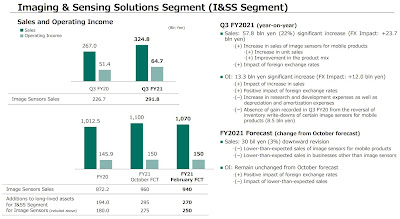
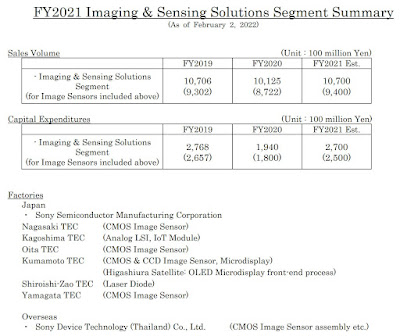
Sony reports its quarterly results for the quarter ended on January 31, 2021:

  • Despite severe conditions in the smartphone market, such as weakness in the Chinese market and shortages of components, especially semiconductors, the efforts we have made heretofore to expand and diversify our mobile sensor customer base, as well as to recover our market share on a volume basis, are having some success.
  • However, it is taking longer than expected to introduce the high-performance, high resolution custom sensors that we have been working on with Chinese smartphone makers, so the speed of profitability improvement resulting from an increase in addedvalue products going into next fiscal year will be slightly lower than originally planned.
  • Recently, the trend toward Chinese smartphone makers purchasing larger-sized sensors for their high-end products is improving after having stagnated due to the contraction of our business with a certain Chinese customer. We expect the Chinese smartphone market to normalize in the second half of next fiscal year.
  • Since we feel better about the possibility of sales growth and further market share expansion next fiscal year, we will focus even more on increasing the added-value of our products and strive to improve profitability.
  • On January 25, 2022, Sony Semiconductor Solutions Corporation completed its initial investment in Japan Advanced Semiconductor Manufacturing Co., Ltd. (“JASM”), as a minority shareholder.
  • Sony will support JASM by assisting with the start-up of this new logic wafer factory which aims to begin mass production during calendar year 2024.

Go to the original article...

IC Insights: CIS Sales Did Not "Surge" in 2021

Image Sensors World        Go to the original article...

IC Insights market report says that "Optoelectronics sales growth was muted in the 2021 rebound due to the lack of a surge in CMOS image sensors, which were held back by trade frictions and technology disputes between the U.S. and China, fluctuations in some key end-use applications, and shortages of ICs and other components used in digital-imaging systems. Optoelectronics sales increased 9% in 2021 to a record-high $47.9 billion, and the large CMOS image sensor category only grew 6% to $20.3 billion last year, says the January report."

Talking about the 2021 market observations, Tencent says that "Samsung has raised its CIS quotation since December 2020 by 40%, and the quotations of other CIS suppliers have also increased by about 20%."

Go to the original article...

Superlattice-based Imagers

Image Sensors World        Go to the original article...

Center for Quantum Devices at Northwestern University publishes a presentation on superlattices for low noise imaging from UV to VLWIR by Manijeh Razeghi:

Go to the original article...

MIPI Adopts A-PHY v1.1

Image Sensors World        Go to the original article...

MIPI Alliance adopts A-PHY v1.1 automotive SerDes, doubling the maximum downlink data rate from 16 Gbps to 32 Gbps, doubling the uplink data rate and providing manufacturers with additional implementation options. 

Go to the original article...

Silkworms Create Image Sensor-based Security Device

Image Sensors World        Go to the original article...

PRNewswire: A physical unclonable function (PUF) is a physical feature that takes advantage of microscopic differences in electronics to create unique security "keys." These keys, when read by an electronic device, help establish or refute the authenticity of the input, thereby either granting or denying access. Now, researchers from the Gwangju Institute of Science and Technology, Korea, have designed the first natural PUF. Using native silk fibers obtained from Bombyx mori (domesticated silkworms), the research team designed PUF-based tags. These tags were then used to devise a lens-free, optical (light-based), and portable PUF (LOP-PUF) module.
"When a beam of light hits the disordered silk fibers of an optimal density, it causes light diffraction. The nanostructures in individual microfibers enhance the contrast of light intensity with respect to the background. The diffracted light is then captured by an image sensor. Since the pattern of the microholes is naturally-made, it is unique, giving rise to a unique pattern of light," explains Young Min Song, professor at the Gwangju Institute of Science and Technology.

The research paper "Revisiting silk: a lens-free optical physical unclonable function" by Min Seok Kim, Gil Ju Lee, Jung Woo Leem, Seungho Choi, Young L. Kim & Young Min Song is published in Nature Communications.
Go to the original article...

Silkworms Create Image Sensor-based Security Device

Image Sensors World        Go to the original article...

PRNewswire: A physical unclonable function (PUF) is a physical feature that takes advantage of microscopic differences in electronics to create unique security "keys." These keys, when read by an electronic device, help establish or refute the authenticity of the input, thereby either granting or denying access. Now, researchers from the Gwangju Institute of Science and Technology, Korea, have designed the first natural PUF. Using native silk fibers obtained from Bombyx mori (domesticated silkworms), the research team designed PUF-based tags. These tags were then used to devise a lens-free, optical (light-based), and portable PUF (LOP-PUF) module.

"When a beam of light hits the disordered silk fibers of an optimal density, it causes light diffraction. The nanostructures in individual microfibers enhance the contrast of light intensity with respect to the background. The diffracted light is then captured by an image sensor. Since the pattern of the microholes is naturally-made, it is unique, giving rise to a unique pattern of light," explains Young Min Song, professor at the Gwangju Institute of Science and Technology.

The research paper "Revisiting silk: a lens-free optical physical unclonable function" by Min Seok Kim, Gil Ju Lee, Jung Woo Leem, Seungho Choi, Young L. Kim & Young Min Song is published in Nature Communications.

Go to the original article...

Hynix Begins Mass Production of 0.7um Pixels

Image Sensors World        Go to the original article...

BusinessKorea: Keeping an earlier promise, SK Hynix has started to mass-production of 50MP sensors with 0.7㎛ pixels. The image quality is said to be "at the same level as Sony products."

Samsung has been manufacturing a 50MP sensor with 0.64㎛ pixels since June 2021. Omnivision announced 200MP sensor with 0.61㎛ pixels.

SK Hynix is expected to supply its 50MP 0.7um sensor to Samsung for use in Galaxy A series of smartphones scheduled to be released in the 2H2021. Previously, SK Hynix supplied 1.0㎛ pixel-based 13MP sensors for Samsung's foldable smartphone Galaxy Z Flip 3.

Go to the original article...

Chinese CIS Companies Report All-Time High Profits

Image Sensors World        Go to the original article...

SecuritiesTimes: Omnivision's net profit in 2021 is expected to be in range of 4.468 billion to 4.868 billion yuan, a year-on-year increase of 65.13% to 79.91%. The net profit after deducting "non-deductible items" (?) is 3.918 billion to 4.268 billion yuan, a year-on-year increase of 74.51% to 90.10%.

Galaxycore too expects operating income of 6.652 billion to 7.492 billion yuan in 2021, net profit of 1.135 billion to 1.35 billion yuan, a year-on-year increase of 46.83% to 74.57%; Profits ranged from 1.086 billion to 1.291 billion yuan, a year-on-year increase of 41.75% to 68.52%, both of which are expected to exceed the revenue growth rate over the same period.

Indeed, Strategy Analytics reports show that Omnivision and other Chinese companies increase their smartphone market share at the expense of Sony and Samsung:

Go to the original article...

Panasonic Develops Low-Cost LWIR Lens

Image Sensors World        Go to the original article...

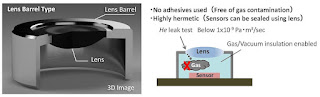
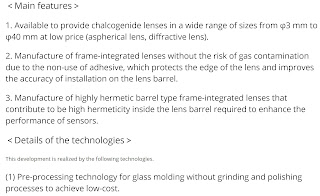
Panasonic has developed a mass production technology of low-cost far-IR aspherical lenses. These lenses are made of chalcogenide glass having excellent transmission characteristics in the far-IR. In addition to realizing low-cost (approx. half compared to the company’s conventional method) by newly developed glass molding method and mold processing technology, Panasonic is now able to offer a variety of lenses such as diffractive lens, the world's first* highly hermetic frame-integrated lens without using adhesive (leak detection accuracy of less than 1x10⁻⁹ Pa・m3/sec in helium leak test).

A low-cost silicon that has been commonly used as the lens material for far-IR sensors is not suitable for high pixel counts due to its low transmittance, so germanium spherical lenses having high transmittance are widely used as the number of pixels increases. However, as the pixel count increases further, the effect of aberration caused by a spherical lens becomes more pronounced. To reduce this effect, combination of many spherical lenses and an aspherical lens will be required, which leads to increase in cost and size.

To resolve this problem, Panasonic has developed a new technology for the low-cost production of high-performance aspherical lenses suitable for far-infrared optical systems, based on the glass molding technology the company cultivated through the production of visible light aspherical lenses for cameras.

Hermetic sealing is important for thermal imaging camera modules. A low cost lens solution makes thermal cameras more accessible to general consumer applications.

Go to the original article...

SmartSens News

Image Sensors World        Go to the original article...

PRNewswire: PDF Solutions announces that SmartSen has selected Exensio Fabless as the platform to perform data management and analytics for their entire family of CIS products.

SmartSens has experienced superior performance and flexibility with Exensio Fabless, as well as powerful analytic templates, the combination of which has enabled SmartSens engineers to achieve a 50% reduction root cause analysis time.

SmartSens is very focused on the needs and requirements of our customers and achieve this by delivering innovative image sensors to the marketplace, and providing our customers with the product volume they need,” said Shao Zexu, VP of Process & IP Strategy at SmartSens. “Exensio Fabless enables our product engineering organization to achieve new levels of excellence in data analytics for all of our product lines. This has resulted in faster time-to-market and exceptional yield for our products, and has increased the demand for our products worldwide.


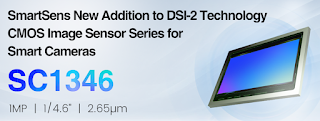
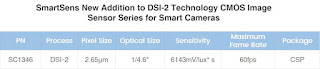
Smartsens announces the SC1346, a 1MP DSI-2 CMOS sensor for smart cameras. The 1MP SC1346 features a 2.65μm pixel size and comes in a 29-Pin CSP package.


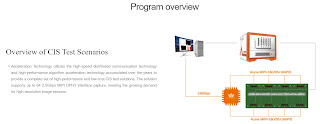
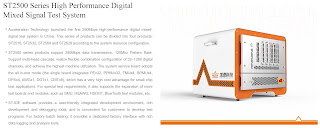
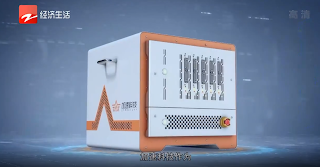
Smartsense announces an in-depth cooperation with Hangzhou Acceleration Technology Co., Ltd. (Speedcury) to jointly develop ultra-high resolution high-speed image acquisition test system for high -speed interface testing of ultra-high frame rate image sensors . The high-speed image acquisition and test system is expected to have a data transmission rate of 3.5Gsps , which will help SmartSens accelerate the mass production of high-end CMOS sensors for smartphone main cameras, drones, 8K smart security cameras , and high-speed industrial cameras.

The 3.5Gsps CIS high-speed image acquisition test system (ST8016C) jointly developed by Smartsens and Acceleration Technology is expected to be completed and mass-produced in Q3, 2022.

Ouyang Jian, Deputy General Manager of Smartsens, says: "Currently Smartsens has the design capability to be compatible with both D-PHY and C-PHY high-speed data transmission interfaces. We will jointly develop a high-speed image acquisition and test system. I believe that with the combination of strong powers, we can further speed up the testing and mass production process of Smartsens' high-end CMOS image sensor products, so as to realize the effective sharing of resources and win-win development of both parties."

Ling Yun, General Manager of Accelerated Technology, said : "I am very pleased to be able to cooperate with a high-end image sensor company like SmartSens to develop a future-oriented CIS high-speed image acquisition test system. Accelerated Technology has always maintained a close cooperative relationship with SmartSens. At present, Smartsens' Kunshan test factory has been equipped with Accelerator Technology ATE Tester (ST2532) and has achieved mass production, with a production capacity of 9kk/month. Accelerator Technology will continue to help outstanding Chinese image sensor companies represented by Smartsens. The development of the company is striving to stand side by side with the international CIS chip giants in the forest of the world, and contribute to the vigorous development of China's semiconductor industry!"

Go to the original article...

Recent Videos: CEA-Leti, Himax, Gigajot, Trieye, Pixart, Oculi

Image Sensors World        Go to the original article...

CEA-Leti publishes a video about its low power always-on image sensor presented in May last year:


Himax presents its always-on image sensor solutions:


Himax also presents its low-power face detecting module:


Gigajot publishes a