ON Semi Publishes a Full Characterization Report of its 8.1MP Automotive Sensor

Image Sensors World        Go to the original article...

Update: The links and the data have been removed at ON Semi request. It is not supposed to be publicly available.

The original post follows:

ON Semi publishes a full characterization report of its relatively new 8.1MP AR0820AT automotive sensor. This is a first time I see such a detailed characterization data in open access with no NDA.

The 1/2-inch AR0820 features:
  • 2.1 µm Automotive Grade BSI Pixel with DR−Pix Technology
  • On−Sensor HDR Reconstruct with Flexible Exposure Ratio Control
  • Full Resolution Video Capture of 3840 x 2160 at up to 40 fps in 3−exposure HDR and 30 fps in 4−exposure HDR
  • Line interleaved T1/T2/T3/T4 output
  • Sensor Fault Detection for ASIL−B Compliance Support
  • 2 x 2 In−pixel Binning Mode and Color Binning Mode
  • Data Interface: 1.8 Gbps/Lane, 4−lane MIPI CSI−2
  • Selectable Automatic or User Controlled Black Level Control
  • Frame to Frame Switching Among up to 4 Contexts to Enable Multi−function Systems
  • Multi−Camera Synchronization Support
  • Multiple CFA Options including RGB, and RCCC, RCCB

Go to the original article...

ams News: Small ToF Proximity Sensor, Smartsens-ams GS Sensor Spec, 10K/15K Resolution Line Scan Imagers

Image Sensors World        Go to the original article...

BusinessWire: ams launches the TMD2636, a fully integrated proximity sensor which occupies 30% less space than currently available solutions, and so delivers transformational added value to manufacturers of True Wireless Stereo (TWS) earbuds.

The TMD2636 sensor module integrates a 940nm VCSEL, IR-sensing photodiodes, control circuitry, and a clear-mold overlay in a 2.0mm x 1.0mm x 0.35mm package. The sensor has an average active-mode current consumption of 70µA and 0.7µA in sleep mode. Central are the TMD2636 power-savings benefits, especially in the small battery capacity and size of a wireless earbud product.


Ams also publishes a fairly detailed spec of its Mira130 global shutter sensor, the fruit of its cooperation with Smartsens:


BusinessWire: ams also announces 10K and 15K resolution line-scan imagers. The new 4LS linear sensors feature four Red/Green/Blue/Clear channels scanning at up to 120,000 lines per second. Each of the four lines may be independently controlled and operated simultaneously for full-color image capture. Camera manufacturers can also implement 4:1 digital TDI, or to perform high-speed object inspection. In addition, the sensors offer the choice of either an 8-bit or 12-bit LVDS output to provide the most appropriate trade-off between image quality and speed. Full well-charge options range from 10 ke- to 40 ke- to enable use in a wide range of illumination conditions.

Pixel size in the new 4LS line scan image sensors is 5.6µm x 5.6µm. Dynamic range is up to 54dB, and quantum efficiency is 61% at 530nm.

Go to the original article...

ISSCC 2021: Albert Theuwissen’s Plenary Talk

Image Sensors World        Go to the original article...

Albert Theuwissen's excellent Plenary video is available on Youtube again:


Update Feb. 22, 2021: An official ISSCC video is now posted in ISSCC channel.

Go to the original article...

Omnivision Unveils 50MP Sensor with All-Pixel Quad PDAF

Image Sensors World        Go to the original article...

BusinessWire: OmniVision announces the OV50A image sensor, combining 50MP, 1.0um pixel size, selective conversion gain and a 1/1.5”optical format with quad phase detection (QPD) AF and on-chip remosaic. QPD enables 2x2 PDAF across the sensor’s entire image array, for 100% coverage. Unlike the microlens and half-shield PDAF technologies, which only capture 3-6% of the phase detection data, QPD captures 100% of this data for improved distance calculation, faster autofocus and better low-light performance. 

One of the biggest selling points for mobile phones is camera performance, and they have been steadily closing the gap with DSLR cameras for years,” said Arun Jayaseelan, staff marketing manager at OmniVision. “Our QPD autofocus technology now makes that gap even smaller, by bringing DSLR level autofocus performance to smartphone cameras.

Additionally, this sensor offers excellent HDR through 2- and 3-exposure staggered HDR timing, along with selective conversion gain for the optimum balance between low-light image quality and HDR.

Built on OmniVision’s PureCel Plus-S stacked die technology, the OV50A integrates an on-chip, QPD color filter array and hardware remosaic, which provides improved autofocus performance along with high quality, 50MP Bayer output, or 8K video, in real time. This sensor can also use near-pixel binning to output a 12.5MP image for 4K2K video with four times the sensitivity, yielding 2.0um-equivalent performance for preview and video. 

Output formats include 50MP, or 8K video, with QPD autofocus at 30fps, 12.5MP with QPD autofocus at 60fps, 4K2K video with QPD autofocus at 90fps, 1080p at 240fps and 720p at 480fps. All of these options can be output at up to 3.5 Gsps per trio, over the sensor’s CPHY MIPI interface.

OV50A samples are expected in Q2 2021.

Go to the original article...

LiDAR News: Ford Divests from Velodyne

Image Sensors World        Go to the original article...

Forbes, Reuters, SeekingAlpha: Ford has completely divested from Velodyne according to a Securities and Exchange Commission filing from Velodyne. In August, 2016, Ford and Baidu each invested $150M in Velodyne to secure the LiDAR supply for their autonomous vehicles research. 

"As of September, 2020 after Velodyne went public, Ford held a 7.6% stake in the company but that has been completely divested and the days of Velodyne sensors on the automakers vehicles are likely numbered.

It is now expected that the Ford AVs coming next year and the Volkswagen AVs in 2023 will utilize the Princeton Lightwave technology (acquired by Argo AI) for at least the rooftop long-range lidar."

Go to the original article...

ISSCC 2021: Albert Theuwissen Delivers Plenary Presentation

Image Sensors World        Go to the original article...

Albert Theuwissen delivers Plenary presentation "There’s More to the Picture Than Meets the Eye (and in the future it will become only much more)"

"Over the last five decades, solid-state imaging has gone through a difficult “childhood”, changing technology during its “adolescence”, and finally growing up to become a mature, “adult” that can compete with the human visual system when it comes to image quality.

State-of-the-art mobile devices enjoyed by consumers, rely on a multi-disciplinary mixture of analog electronics, digital circuits, mixed signal design, optical know-how, device physics, semiconductor technology, and algorithm development. As a result, CMOS image sensors utilized in today’s mobile phones come close to perfection as far as imaging characteristics are concerned. However, this does not mean that further developments in the field are no longer necessary. On the contrary, new technologies and new materials are opening up new dimensions and new applications which complement the classical imaging functionality of sensors.

This trend will ultimately convert the image sensor landscape from image capturing to smart vision. Consequently, the future of solid-state imaging will not only revolve around the shooting of beautiful images, as the market driver will no longer be limited only to mobile phones."

Go to the original article...

ISSCC 2021: Sony SPAD-Based HDR Sensor

Image Sensors World        Go to the original article...

Sony presents an HDR counter & time stamp-based approach for SPAD sensors:

"A 250fps 124dB Dynamic-Range SPAD Image Sensor Stacked with Pixel-Parallel Photon Counter Employing Sub-Frame Extrapolating Architecture for Motion Artifact Suppression"
by Jun Ogi, Takafumi Takatsuka, Kazuki Hizu, Yutaka Inaoka, Hongbo Zhu, Yasuhisa Tochigi, Yoshiaki Tashiro, Fumiaki Sano, Yusuke Murakawa, Makoto Nakamura, Yusuke Oike.

Go to the original article...

ISSCC 2021: Samsung 0.64um Pixel

Image Sensors World        Go to the original article...

This year, ISSCC has not released its usual media kit with preview snippets of the most interesting papers. So, I'm filling the void with few such snippets. The first one is about Samsung 0.64um pixel:

"1/2.74-inch 32Mpixel-Prototype CMOS Image Sensor with 0.64μm Unit Pixels Separated by Full-Depth Deep-Trench Isolation"
by JongEun Park, Sungbong Park, Kwansik Cho, Taehun Lee, Changkyu Lee, DongHyun Kim, Beomsuk Lee, SungIn Kim, Ho-Chul Ji, DongMo Im, Haeyong Park, Jinyoung Kim, JungHo Cha, Taehoon Kim, In-Sung Joe, Soojin Hong, Chongkwang Chang, Jingyun Kim, WooGwan Shim, Taehee Kim, Jamie Lee, Donghyuk Park, EuiYeol Kim, Howoo Park, Jaekyu Lee, Yitae Kim, JungChak Ahn, YoungKi Hong, ChungSam Jun, HyunChul Kim, Chang-Rok Moon, Ho-Kyu Kang

"...a 0.7μm pixel sensor was demonstrated with acceptable photodiode (PD) full-well capacity (FWC) of >6,000e as well as signal-to-noise ratio (SNR) of ~32dB without optical/electrical crosstalk by employing state-of-the-art full-depth deep-trench isolations (FDTIs). However, further scaling requires elaborate fabrication innovation and layout ideas. At the same time, meeting every aspect of pixel performance compared to the previous generation becomes even more difficult, e.g., with respect to dark or illuminated characteristics, fixed-pattern or temporal noises, etc. The latter, in particular, is associated with in-pixel source-follower (SF) amplifiers. Therefore, electrical performance of scaled in-pixel transistors cannot be overlooked. In this paper, a 32-megpixel (MP) CIS with 0.64μm unit pixels is demonstrated with FDTI design. Innovations in terms of fabrication and design to achieve this performance with scaling are discussed."

Go to the original article...

Ricoh Explains Importance of Low-Ripple Supply for Image Sensors

Image Sensors World        Go to the original article...

Ricoh publishes a video explaining the importance of low ripple supply for CMOS sensors:

Go to the original article...

Pointcloud Inc. and University of Southampton Publish Nature Paper on their Coherent 3D Imager

Image Sensors World        Go to the original article...

A Nature paper "A universal 3D imaging sensor on a silicon photonics platform" by Christopher Rogers, Alexander Y. Piggott, David J. Thomson, Robert F. Wiser, Ion E. Opris, Steven A. Fortune, Andrew J. Compston, Alexander Gondarenko, Fanfan Meng, Xia Chen, Graham T. Reed & Remus Nicolaescu from San Francisco-based Pointcloud Inc. and UK University of Southampton appears to be a minor version of their Arxiv.org paper published in August 2020.

Graham Reed, Professor of Silicon Photonics within the ORC said, “LIDAR has been promising a lot but has not always delivered on its potential in recent years because, although experts have recognised that integrated versions can scale down costs, the necessary performance has not been there. Until now.

The silicon photonics system we have developed provides much higher accuracy at distance compared to other chip-based LIDAR systems to date, and most mechanical versions, showing that the much sought-after integrated system for LIDAR is viable.

Remus Nicolaescu, the CEO of Pointcloud Inc added, “The combination of high performance and low cost manufacturing, will accelerate existing applications in autonomy and augmented reality, as well as open new directions, such as industrial and consumer digital twin applications requiring high depth accuracy, or preventive healthcare through remote behavioural and vital signs monitoring requiring high velocity accuracy."

"Operating at the quantum noise limit, our system achieves an accuracy of 3.1 millimetres at a distance of 75 metres when using only 4 milliwatts of light, an order of magnitude more accurate than existing solid-state systems at such ranges. Future reductions of pixel size using state-of-the-art components could yield resolutions in excess of 20 megapixels for arrays the size of a consumer camera sensor."

Go to the original article...

Samsung Explains its Smart-ISO Pro

Image Sensors World        Go to the original article...

Samsung publishes a promotional video explaining its Smart-ISO Pro feature:

Go to the original article...

Smartsens Presents its Global Shutter Sensor Plans

Image Sensors World        Go to the original article...

EET-China publishes Smartsens article on the company's machine vision sensors evolution:

Go to the original article...

Teledyne Trumpets a New Era in Large Area CMOS Imaging

Image Sensors World        Go to the original article...

GlobeNewsWire: Teledyne Imaging (former Princeton Instruments group) introduces LACera technology said to be "a significant step forward in CMOS capabilities for advanced imaging which will enable the next generation of scientific discovery.

LACera delivers greater than 90% QE and a proprietary low noise global shutter architecture with up to 18-bit readout – a combination of performance not previously available in wafer scale sensors.

LACera technology will be exclusively featured in next generation CMOS cameras to be announced later this year and includes x-ray, EUV and VIS-NIR versions.

Go to the original article...

NIT Announces Novel Stacking Technology for InGaAs to ROIC Bonding

Image Sensors World        Go to the original article...

New Imaging Technologies announces the release of several new SWIR sensors now produced with NIT in-house designed stacking technology, internally named NH.

The NH technology allows to stack a photodiode array (PDA) of InGaAs to a CMOS ROIC at pixel level. The NH technology does not rely on the classical Indium bump hybridization technique, therefore improving the manufacturing yield and lowering the sensor cost.

The VGA line of SWIR products with 15µm pitch is already in full production since several years using the NH technology.  New products with higher resolution and lower pitch from 10µm down to 7.5µm are currently under qualification, such as an HD array (1280×1024 pixels @ 10µm)

The roadmap towards very small pitch <5µm and Full HD+ formats is under construction at NIT.

Go to the original article...

ON Semi Unveils Low Power Smart Shot Camera

Image Sensors World        Go to the original article...

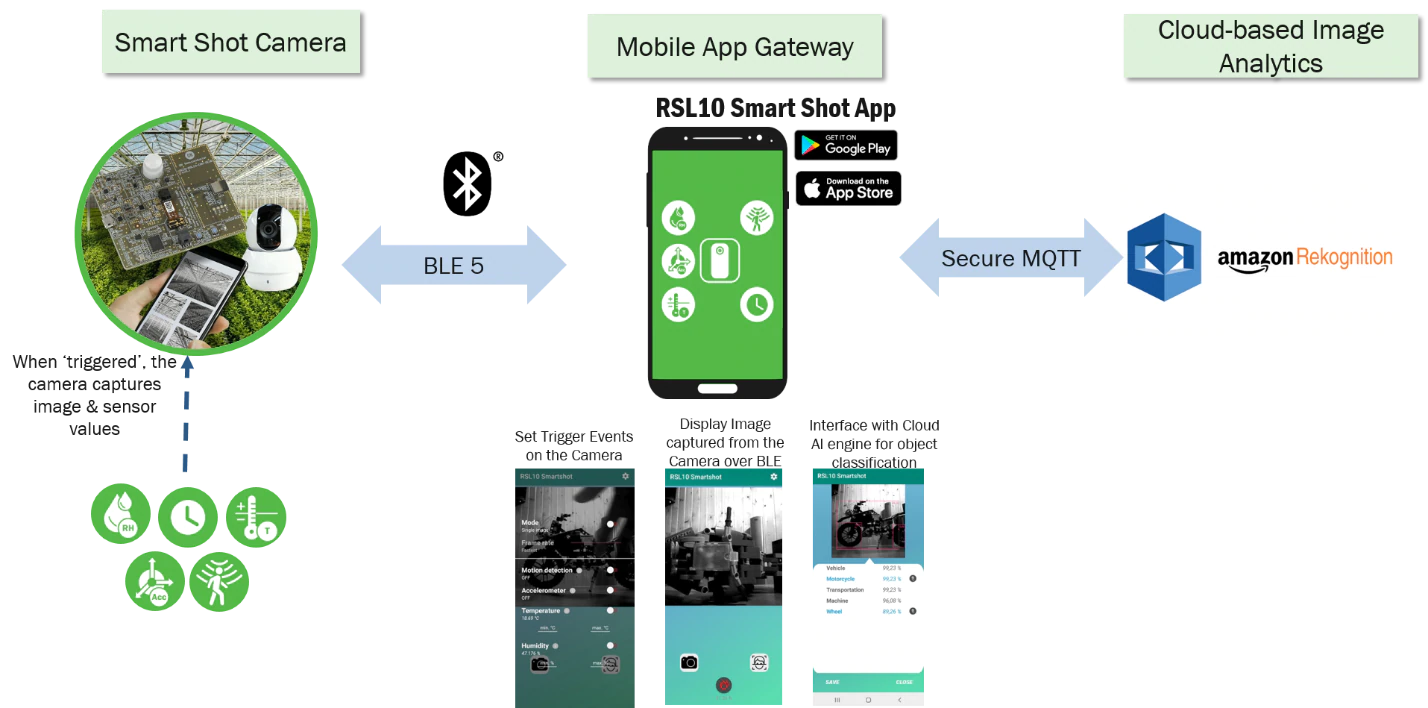
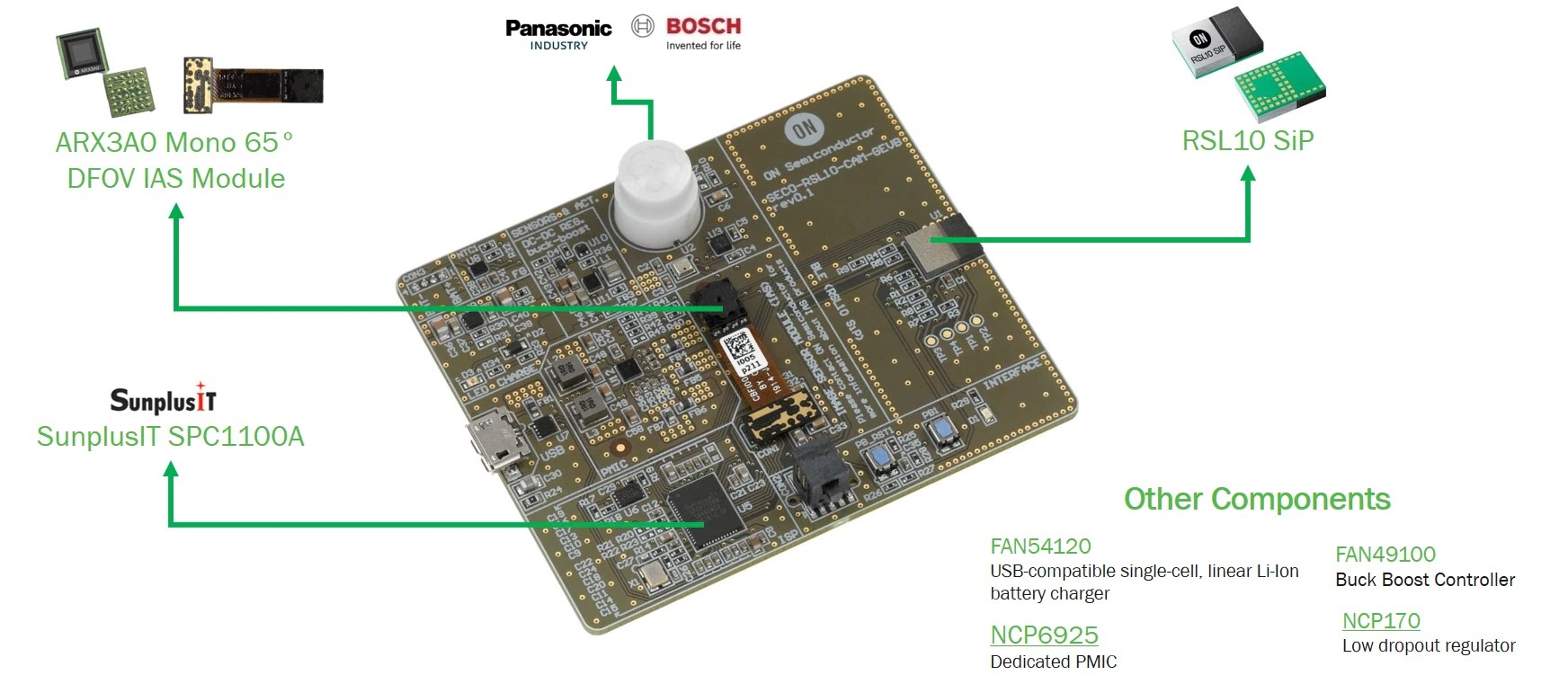
BusinessWire: ON Semiconductor introduces the RSL10 Smart Shot Camera, combining cloud-based AI with ultra-low-power image capture and recognition for IoT endpoints. The camera is based on ARX3A0 CMOS sensor with 560 x 560 pixel resolution, 2.2um pixel size, and a frame rate up to 360 fps. The sensor has an innovative super low power mode which draws less than 3.2 mW while active, and can detect motion or changes in lighting conditions and wake the rest of the system up.

Go to the original article...

Albert Theuwissen Delivers Keynote at IEEE Sensors 2020: DTI is Here to Stay!

Image Sensors World        Go to the original article...

Albert Theuwissen delivered a keynote at 2020 IEEE Sensors conference titled "Deep-Trench Isolation is Here to Stay!" Below is a video recording of the keynote:

Go to the original article...

SMIC to Benefit from Increased Demand to its 40nm and 65nm CIS Process

Image Sensors World        Go to the original article...

Wccftech: Goldman Sachs believes that SMIC is poised to benefit from the demand increase for image sensors on the 40nm to 65nm process nodes.

Go to the original article...

Do Event-Based Imagers Have Advantage over Regular Global Shutter Ones?

Image Sensors World        Go to the original article...

A team of researchers from Czech Institute of Informatics, Robotics and Cybernetics, Czech Technical University in Prague, and University of Defence, Brno, Czech Republic, publishes an interesting MDPI paper "Experimental Comparison between Event and Global Shutter Cameras" by Ondřej Holešovský, Radoslav Škoviera, Václav Hlaváč, and Roman Vítek.

"We compare event-cameras with fast (global shutter) frame-cameras experimentally, asking: “What is the application domain, in which an event-camera surpasses a fast frame-camera?” Surprisingly, finding the answer has been difficult.

Our methodology was to test event- and frame-cameras on generic computer vision tasks where event-camera advantages should manifest. We used two methods: (1) a controlled, cheap, and easily reproducible experiment (observing a marker on a rotating disk at varying speeds); (2) selecting one challenging practical ballistic experiment (observing a flying bullet having a ground truth provided by an ultra-high-speed expensive frame-camera). The experimental results include sampling/detection rates and position estimation errors as functions of illuminance and motion speed; and the minimum pixel latency of two commercial state-of-the-art event-cameras (ATIS, DVS240).

Event-cameras respond more slowly to positive than to negative large and sudden contrast changes. They outperformed a frame-camera in bandwidth efficiency in all our experiments. Both camera types provide comparable position estimation accuracy. The better event-camera was limited by pixel latency when tracking small objects, resulting in motion blur effects. Sensor bandwidth limited the event-camera in object recognition. However, future generations of event-cameras might alleviate bandwidth limitations.

We tested two event-cameras: iniVation (Zurich, Switzerland) DVS240 (DVS240 in short), which is an evolved version of the popular DAVIS240, and Prophesee (Paris, France) ATIS HVGA Gen3 (ATIS in short)."

When comparing the following data, especially the low-light part of it, please note that Basler camera has about 16 times smaller pixel area than the other 3 cameras. Also note that the power efficiency was not a part of this research.


"In future work, (a) we aim to research event/frame-camera performance in high dynamic range scenes; and (b) use event-cameras in robotic perception tasks requiring fast feedback loops."

Go to the original article...

TED Special Issue on Image Sensors

Image Sensors World        Go to the original article...

IEEE updates the instructions for paper submission for Special Issue of IEEE Transactions on Electron Devices on “Solid-State Image Sensors” to be published in June 2022:

Go to the original article...

PD Field Engineering for Fast and Complete Charge Transfer

Image Sensors World        Go to the original article...

Iran University of Science and Technology, Tehran, publishes an arxiv.org paper "A Simulation Study of Electric Field Engineering with Multi-Level Pinned Photodiodes for Fast and Complete Charge Transfer" by Hamzeh Alaibakhsh, Mohammad Azim Karami.

"In special cases such as time-of-flight imaging or large pinned photodiodes, the PPD potential well shape highly affects the charge transfer performance and should be engineered carefully. In the present work, a PPD structure named multi-level PPD is introduced and examined through simulation study. Moreover, a fast and effective way to analyze the pinning process for a lag-free design is introduced. It is concluded that the proposed PPD achieves fast and complete charge transfer without additional implementation masks or process steps. The proposed PPD is compared with a similar conventional rectangular pixel and 31% reduction in the charge transfer time is observed."

Go to the original article...

Flat Lens News: Metalenz, KAIST

Image Sensors World        Go to the original article...

Techcrunch: Metalenz raises $10M in series A investment to productize flat lens for camera module. “We’re really using all standard semiconductor processes and materials here, the exact same equipment — but with lenses instead of electronics,” said Rob Devlin, the company's founder and CEO. “We can already make a million lenses a day with our foundry partners.


BusinessKorea, AjuDaily, AdvancedOpticalMaterials: KAIST too develops a flat lens for use in lightfield cameras. "In the camera developed by the team, the light absorbing layer of nano thickness is inserted between microlens arrays to result in contrast and resolution enhancement. The layer is a metal-dielectric-metal thin film with a thickness of 200 nm and the team reduced the gap between the objective lens and the microlens to make the camera extremely thin."

Go to the original article...

Sony Expects its Mobile CIS Business to Return to Growth in 1-2 Years

Image Sensors World        Go to the original article...

SeekingAlpha publishes Sony earnings call transcript that gives few more details about the company's CIS business. Sony expects its mobile image sensor business to get back to the growth trajectory in the fiscal year ending on March 31, 2023:

"FY 2020 Q3 sales decreased 10% year-on-year to JPY 266.9 billion, primarily due to lower sales of image sensors for mobile. Operating income decreased by JPY 24.8 billion to JPY 50.4 billion, primarily due to the impact of the decrease in sales and an increase in research and development expenses and depreciation.

In September of last year, we terminated shipments of mobile image sensors to a certain major Chinese customer, but we resumed a portion of shipments to that customer from late November. Although we have incorporated the impact of this resumption into our forecast for the current fiscal year, we expect sales to the customer to decrease significantly year-on-year. As a result of the resumption of shipments, we reversed JPY 8.5 billion of approximately JPY 17.5 billion write-down of finished goods and work-in-progress inventory for the customer that we recorded at the end of the previous quarter.

Now I will explain the fiscal year forecast we issued today. Orders from our other major non-Chinese customer have significantly exceeded the assumption we made in our October forecast, and we have reflected that fact in the current forecast for the fiscal year.

As I mentioned at the last earnings announcement, we are striving to recover market share through an increase in sales of general-purpose sensors, and we are working to expand and diversify our customer base. In order to maximize business opportunities in the fiscal year ending March 31, 2022, and optimize investment efficiency, we have decided to increase utilization of our existing production capacity in FY 2020 fourth quarter and we will be stockpiling a certain level of inventory.

And we have incorporated into our FY 2020 profit forecast, the utilization profit we expect to generate from stockpiling this inventory. Over the mid-range, we are developing products and engaging with customers to increase the sales of high value-added products with the aim of recovering the profitability of the mobile image sensor business and returning it to growth from the fiscal year ending March 31, 2023."

Go to the original article...

Himax Reports 2020 Results

Image Sensors World        Go to the original article...

GlobeNewsWire: Himax updates about its image sensor business:

"Himax sees continuous surging demands for its CMOS image sensors for web camera and notebook as the new norm of virtual conferences shows no signs of receding. However, the Company’s actual shipment has been badly capped by the foundry capacity available to it.

Separately, Himax’s industry-first 2-in-1 CMOS image sensor that supports RGB mode for video conferencing and ultralow power AI mode for facial recognition has penetrated the laptop market for the most stylish super slim bezel designs. The Company has shipped small quantity in the fourth quarter and expect to ship more during 2021.

Regarding ultralow power always-on CMOS image sensor, which targets in-battery powered or always-on applications, the Company is getting promising feedback and design adoptions from customers in various markets, such as car recorders, surveillance, smart electric meters, drones, home appliances, and consumer electronics. In Q1, the CIS revenue is expected to be up mid-single digit sequentially although the Company still cannot fulfill all the demand due to foundry capacity constraint."

Go to the original article...

Sony Reports 10% CIS Sales Drop, Rises Full Year Forecast

Image Sensors World        Go to the original article...

Sony reports its quarterly results and updates forecast for its fiscal year ending on March 31. The quarterly CIS sales dropped by 10% due to the lower mobile phone sensor sales and cheaper product mix. However, the forecast for the full year has been revised upward due to resumption of sales to Huawei that were stopped in September 2020. So, the full fiscal year sales are expected to drop by only 5%:

Go to the original article...

Sony Global Shutter Sensor Designers Interview

Image Sensors World        Go to the original article...

Sony publishes a large interview with its global shutter image sensor designers titled "Pregius S—to be a bridgehead for pioneering new markets such as robot arms through the pursuit of high speed, multi-pixel as well as size reduction." Few quotes:

"...there is a question why CIS-based GS did not exist before, and the answer is partly because a new structure was needed to add the GS function to the previous CIS. To realize this, a diversity of technology was required for microfabrication, such as memory storage potential structure design, design to embed it in the photodiode, technology to transfer stored information without a loss, pixel designing technology, micro-processing technology, etc., to a greater extent than that required for conventional CIS.

Our competitors produced CISs with superior energy efficiency or speed (higher frame rates), but we heard that many users complained of the noises compromising the picture quality.

Against this backdrop, we decided to develop a CIS for GS, Pregius, leveraging our expertise in pixel technology which we cultivated through SSS Group’s pioneering RS mode CIS and CCD image sensors.

...finally, we delivered increased multi-pixels and size reduction while at the same time achieved to eliminate noises, which competitors could not solve.

Pregius by SSS Group had impressive responses for its low-noise picture quality that was far superior to its competitions, but the market for industrial machines was moving fast, and there was an increasing demand for smaller (miniaturized) and faster GSs with more pixels.

The back-illuminated structure enabled enhanced light saturation and increased pixels, but the most challenging task for development of Pregius S was to shield the pixels so that the light did not seep into unintended parts."

Go to the original article...

ON Semi Reports CIS Sales Growth

Image Sensors World        Go to the original article...

ON Semi reports its Q4 2020 results with image sensor sales showing about 4.3% growth over the same quarter in 2019:

Go to the original article...

ON Semi Reports CIS Sales Growth

Image Sensors World        Go to the original article...

ON Semi reports its Q4 2020 results with image sensor sales showing about 4.3% growth over the same quarter in 2019:


Update: SeekingAlpha publishes ON Semi earning call transcript featuring the company's new CEO  Hassane El-Khoury. Few quotes on imaging business:

"Our design win funnel continues to expand. We won ADAS and viewing sockets on many of the recently announced platforms. We also secured a win for our LiDAR products with a European automotive OEM. We expect this win to ramp later this year. Another significant design during the fourth quarter was with a major tier 1 for our sensor module which features a lens integrated in a sensor pocket package for in-vehicle experience application.

We are seeing strong traction for machine vision factory automation applications with our exit XGS family of image sensors."

Go to the original article...

Color Filters for 0.255um Pixels

Image Sensors World        Go to the original article...

OSA Optics Express paper "Absorptive metasurface color filters based on hyperbolic metamaterials for a CMOS image sensor" by Jongwoo Hong, Hyunwoo Son, Changhyun Kim, Sang-Eun Mun, Jangwoon Sung, and Byoungho Lee from Seoul National University shows a possibility of a straight Bayer pattern with 0.255um pixels. By straight Bayer, I mean no 2x2, 3x3 or similar color grouping.

"Metasurface color filters (MCFs) have attracted considerable attention thanks to their compactness and functionality as a candidate of an optical element in a miniaturized image sensor. However, conventional dielectric and plasmonic MCFs that have focused on color purity and efficiency cannot avoid reflection in principle, which degrades image quality by optical flare. Here, we introduce absorptive-type MCFs through truncated-cone hyperbolic metamaterial absorbers. By applying a particle swarm optimization method to design multiple parameters simultaneously, the proposed MCF is theoretically and numerically demonstrated in perceptive color on CIELAB and CIEDE2000 with suppressed-reflection. Then, a color filter array is numerically proven in 255 nm of sub-pixel pitch."

The work is supported by the Samsung University R&D program.